
The Swadeshi Jagran Manch (SJM) has urged the Indian government to deny permission to Elon Musk's Starlink for commercial satellite broadband services, citing national security concerns. The RSS-affiliated organisation highlighted issues with data bypassing Indian gateways and the potential for misuse by hostile actors, advocating for indigenous solutions.

Investors who bought attractively valued IPOs and held on have earned strong returns, particularly when the money raised went into companies rather than into the pockets of exiting shareholders.

Massive nationwide protests in France over the rising cost of living and underfunded public services turned violent, with nearly 1,000 people arrested and key urban centres hit by tear gas and clashes.

Donald Trump criticised France's immigration policies, linking them to ongoing nationwide protests and using the situation to justify his own stance on US border control. His remarks come as France faces widespread demonstrations over the cost of living and educational funding, leading to nearly 1,000 arrests. French President Emmanuel Macron, without naming Trump, condemned foreign leaders for exploiting France's domestic unrest for their political campaigns.
'In the past, when the Indian markets have been flat for two years, the next year's returns have ranged between 5 per cent and 55 per cent.'

'Read the prospectus as a capital allocator deciding whether the business deserves your capital at the offered price.'

The Securities and Exchange Board of India (Sebi) has swiftly barred Copthall Mauritius Investment and Mansi Share & Stock Broking from the securities market for alleged manipulative trades during the closing auction session (CAS) on Sensex expiry. The regulator has also directed the impounding of wrongful gains totalling 3.67 crore from the two entities.

Foreign portfolio investors (FPIs) have injected Rs 30,919 crore into Indian equities in August, marking their second consecutive month of net buying. This follows a Rs 20,200 crore investment in July, indicating a potential reversal after four months of significant outflows, driven by improving corporate earnings, resilient economic activity, and a stable rupee.

Chinese President Xi Jinping is set to visit the United States from September 23 to 25 for summit talks with US President Donald Trump, with discussions expected to cover critical economic and trade issues, including AI, and the recently signed US sanctions law targeting countries buying Russian oil and gas.

Indian government bond yields have recorded their worst losing streak in three decades, rising for the tenth consecutive week, driven by elevated crude oil prices and increasing global yields. The rupee also weakened, and India's foreign exchange reserves saw a significant decline.

Union Home Minister Amit Shah on Tuesday met the families of individuals who lost their lives due to drug-related issues in Punjab, saying he had never felt so deeply saddened in life as he did while meeting them and also called out the AAP government for failing to curb the menace.

A member must generally have completed 12 months of EPF membership to use the facility.

Analysts predict that the Reserve Bank of India's interest rate decision, crude oil prices, and global bond yields will be the primary factors influencing the Indian stock market this week, alongside macroeconomic data and foreign investor activity.

'The Indian market has struggled over the past two years.' 'It peaked in September 2024, and although it has moved up and down since then, investors have not really made money.'

The RBI can slow the rupee's fall, but lasting stability depends on tackling the root causes of depreciation and attracting foreign investment.

They had bought Rs 29,631 crore worth of shares in August.

'India should not trade away its energy security for temporary tariff relief. Neither signing a trade agreement nor stopping Russian oil purchases can protect it from future US action.'

Indian benchmark stock indices, Sensex and Nifty, rallied significantly, with Sensex jumping over 1,500 points and Nifty reaching a nearly three-week high, driven by strong buying in banking, IT, and Reliance Industries stocks, alongside easing crude oil prices.

US Secretary of State Marco Rubio's visit to India this week underscores the complex dynamics of global energy policy, as Washington re-evaluates sanctions on Russian oil buyers amidst India's continued reliance on Russian crude.

Kerala BJP president Rajeev Chandrasekhar has accused Chief Minister VD Satheesan of "selective secularism" following the arrest of a YouTuber for allegedly making communal remarks about a Fort Kochi cafe. Chandrasekhar questioned the ruling Congress and CPI(M)'s political culture, which he claims disrespects religious sentiments, while other leaders like Home Minister Ramesh Chennithala and MP Hibi Eden condemned the communal remarks and defended Kerala's secular fabric and tourism.
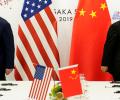
Top US and Chinese officials, including Vice Premier He Lifeng and Treasury Secretary Scott Bessent, held "candid, in-depth and constructive" talks in New York on economic and trade issues, with a specific focus on artificial intelligence. These discussions precede Chinese President Xi Jinping's anticipated visit to Washington and occur amidst new US sanctions targeting countries purchasing Russian oil and gas, and the US unveiling an "AI Force."

'I have seen in Agra parents selling their buffalo, which is their sole source of livelihood, to buy expensive medicines to treat their child.' 'I was very moved by such cases and therefore approached the court to regulate the price of medicines in our country.'

'They allow people to enter and exit. And there is transparency. There is market infrastructure. There is technology. There is cyber security. And then there are enough enablers.'

'You cannot say on day one that a stock is a multibagger. Multibaggers evolve.'
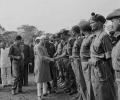
The conversations on July 22 and 23, 1962, meetings in Geneva between V K Krishna Menon, India's defence minister at the time, and Chinese vice premier Chen Yi are important because, had they been followed up, the subsequent border war may perhaps have been avoided, notes former foreign secretary Shyam Saran.
The India-Oman free trade agreement, operationalised on June 1, is set to create significant export opportunities for India's labour-intensive and value-added sectors, including textiles, gems and jewellery, and marine products, while also strengthening energy security.

The Securities and Exchange Board of India (Sebi) is set to expand its artificial intelligence (AI)-based surveillance beyond trading data to include corporate filings, aiming to proactively flag financial misstatements and manipulation in quarterly results without relying solely on investor complaints.

Chinese President Xi Jinping concluded his three-day visit to the US, stating that his discussions with President Donald Trump had injected "new substance" into the China-US relationship. Both leaders expressed optimism for future cooperation, with agreements reached on certain trade goods and discussions held on AI capabilities.

Former Bangladesh Prime Minister Sheikh Hasina has strongly criticised Prime Minister Tarique Rahman's decision to skip the BRICS summit in India, calling it "immature" and detrimental to Bangladesh's national interest. She argued that the absence lost opportunities for economic development and that foreign policy should not be driven by personal considerations. Hasina also highlighted the current "grave national crisis" in Bangladesh and her intention to return to restore democracy.

'This incident will send a wave of fear through the entire Bollywood community.'

Marchers would walk four or five abreast through one side of the main Mahatma Gandhi Road, holding red or white banners that stretched from one end to the other, shouting slogans, calling upon passers by, including employees watching from the offices that line the road, to join (Dekhta kya/Shaamil ho), recalls Jyoti Punwani.

External Affairs Minister S Jaishankar highlighted that India's primary concern regarding terrorism from its neighbour, Pakistan, if not fully appreciated by partners like the US, negatively impacts bilateral relations. Speaking at the Asia Society, Jaishankar discussed the turbulence in India-US ties, particularly in light of Washington's renewed engagement with Pakistan and the perceived lack of empathy for India's terrorism concerns, especially under the second Trump administration. He emphasized that addressing these sensitivities is crucial for improving the relationship.

India-US ties may be strained, but abandoning the relationship is not the answer; India must deal with Washington firmly without becoming either servile or hostile, asserts Ambassador T P Sreenivasan.

Prime Minister Narendra Modi conveyed to Chinese President Xi Jinping that peace and tranquillity along the frontier remains an "essential" basis for the development of India-China relations, even as the two leaders welcomed "steady progress" in bilateral ties during their talks on the sidelines of the BRICS summit.

Xi brought in asymmetrical power play by stating that India should have 'strategic cognition' and 'strategic judgement made on the basis of the stage of development the two countries are at'. This is a very nuanced way of asserting China's coercive diplomatic posture and reflects Beijing's penchant to unleash border instability at will, restrict rare earth metal exports, exert pressure on India at global and regional orders, asserts China expert Srikanth Kondapalli.

The Indian Navy has commissioned INS Mangrol, its third anti-submarine warfare shallow water craft (ASW-SWC), in Mumbai. Built by Cochin Shipyard Limited, the vessel is designed to enhance India's ability to detect and counter submarine threats, especially in shallow coastal waters. Its induction is seen as vital amidst rising geopolitical tensions and increased submarine activity in the Indian Ocean, reinforcing India's indigenous shipbuilding capabilities and maritime security.
The Reserve Bank of India (RBI) has reported a significant increase in the use of the Indian Rupee (INR) for import and export invoicing and settlement, highlighting its growing internationalisation and mutual benefits for trading partners.

Chinese President Xi Jinping's first visit to India in seven years for the BRICS Summit and bilateral talks with Prime Minister Narendra Modi is set to address crucial aspects of India-China relations, including trade, investment, and persistent border tensions.

The Indian stock market experienced a significant downturn, with the Sensex crashing over 1,000 points and the Nifty hitting a fresh 52-week low, driven by sustained selling from foreign institutional investors, the RBI's monetary policy tightening, and elevated Brent crude prices.

The US senate last week passed a bill that would allow Washington to impose tariffs on major buyers of Russian energy.
